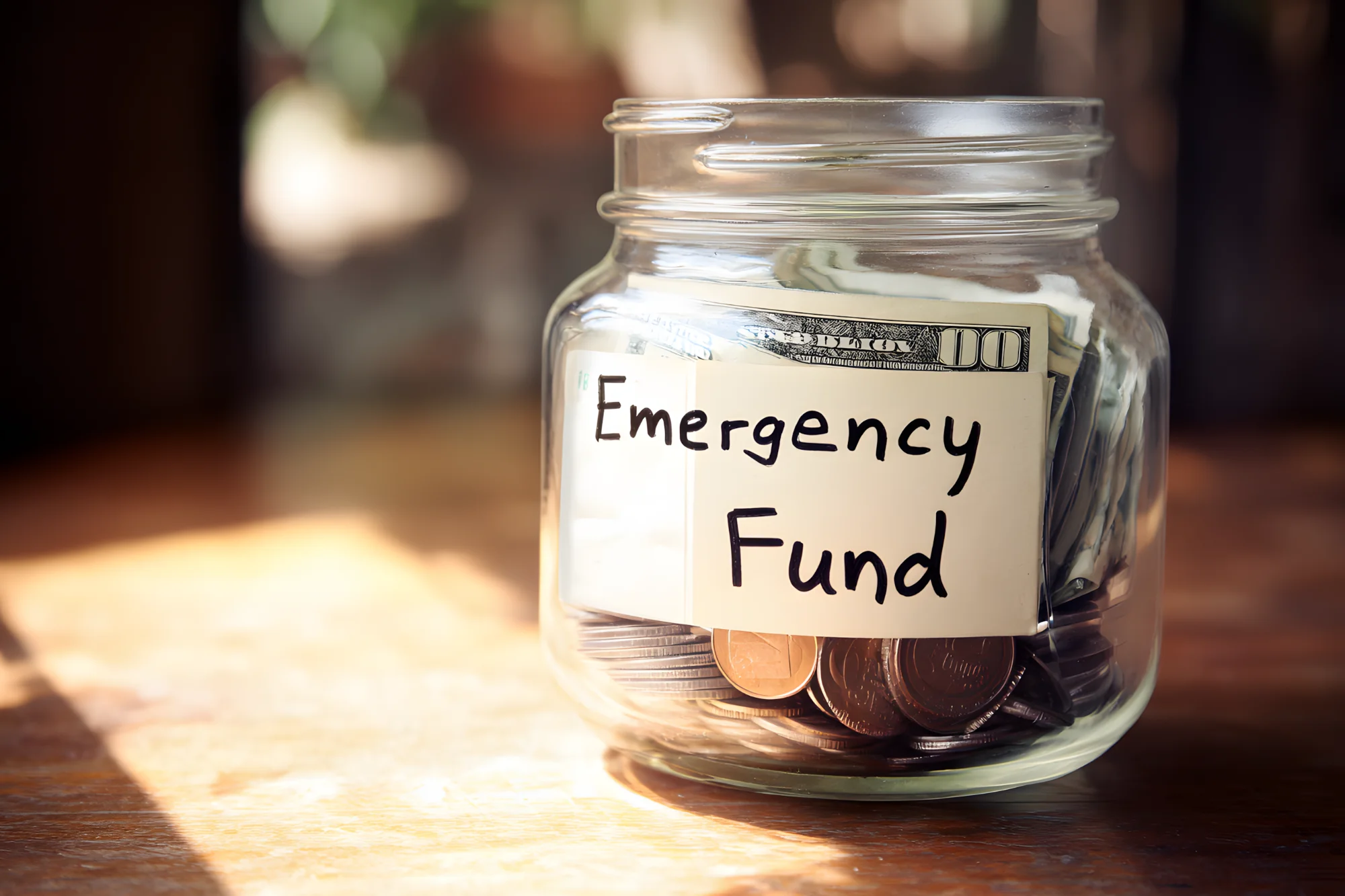
 financial security">
Expert Insight: This article was written by Nicole Anderson, a certified financial planner with 18 years of experience helping individuals and families build financial resilience. Nicole has guided over 2,000 clients through creating emergency savings (Federal Reserve data) strategies that fit their unique situations.
If you've ever faced an unexpected car repair, medical bill, or job loss without savings to cover it, you know that sinking feeling of financial vulnerability. It's the moment when you realize you have no choice but to reach for a credit card, take out a loan, or worse—let a bill go unpaid and face penalties or service shutoffs. This is exactly what an emergency fund prevents.
An emergency fund isn't just a nice-to-have financial luxury—it's the foundation of financial security and the difference between a temporary setback and a financial catastrophe. This comprehensive guide will show you why emergency funds matter, how much you need, where to keep it, and most importantly, how to actually build one even if you're living paycheck to paycheck right now.
Why an Emergency Fund Is Non-Negotiable
The statistics are sobering: according to Federal Reserve data, about 40% of Americans couldn't cover a $400 emergency expense without borrowing or selling something. This means that nearly half the country is one emergency away from financial crisis. If you're in this group, you're not alone—but you're also at significant risk.
Here's what happens without an emergency fund: Your car breaks down and needs $800 in repairs. You can't get to work without it, so you put it on a credit card at 22% APR. Now you're paying $800 plus interest, but the repair wasn't in your budget, so you can only make minimum payments. Three months later, another emergency hits—maybe a medical bill—and you charge that too. Before you know it, you're carrying $3,000 in high-interest debt, and the monthly payments are straining your budget, making it even harder to save.
This is the debt cycle, and it's incredibly difficult to escape once you're in it. Each emergency pushes you deeper into debt, the debt payments consume more of your income, and you have even less cushion for the next emergency. It's a downward spiral that can take years to recover from.
An emergency fund breaks this cycle. Instead of going into debt when emergencies hit, you tap your savings. You handle the crisis, then gradually replenish the fund. You stay out of debt, your credit score remains intact, and you maintain control over your financial situation. The peace of mind alone is worth the effort to build it.
How Much You Actually Need
The standard financial advice is to save 3-6 months of expenses in your emergency fund. This is solid guidance for most people, but the right amount for you depends on your specific circumstances. Let's break down how to calculate your target.
Calculating Your Emergency Fund Target
Step 1: Calculate your true monthly expenses. This isn't your income—it's what you actually need to live. Include:
• Housing (rent or mortgage, property tax, HOA fees)
• Utilities (electric, gas, water, trash, internet)
• Food and groceries
• Insurance (health, auto, home/renters)
• Transportation (car payment, gas, maintenance, public transit)
• Minimum debt payments
• Essential phone service
• Basic clothing and personal items
Don't include things like dining out, entertainment, streaming services, or gym memberships. In a true emergency (like job loss), you'd cut these items immediately. If your total monthly bills are $2,500, that's your baseline.
Step 2: Multiply by 3-6 months based on your situation.
Aim for 3 months if:
• You have stable employment at an established company
• You have two incomes in your household
• You have good health insurance
• You have minimal debt
• You rent (homeowners need more for unexpected repairs)
Aim for 6 months or more if:
• You're self-employed or have irregular income
• You're the sole earner in your household
• You work in a volatile industry
• You own a home
• You have health issues or family health concerns
• You have significant debt
Using our example: $2,500 in monthly expenses × 3 months = $7,500 (minimum target) or × 6 months = $15,000 (ideal target). These numbers can seem overwhelming if you're starting from zero, which is why we'll discuss strategies for building up to this amount gradually.
The Baby Step Approach
If you're drowning in debt or barely making ends meet, the idea of saving $7,500-$15,000 probably seems impossible. That's okay—you don't have to get there overnight. Many financial experts recommend a "baby emergency fund" of $500-$1,000 as your first goal.
Why this amount? Because it covers the most common emergencies: a car repair, a broken appliance, a surprise medical bill, or a high utility bill. It won't cover job loss or major medical emergencies, but it will handle the smaller crises that otherwise push people into debt. Once you have this cushion, you can focus on paying down debt. After your debt is under control, you build up to the full 3-6 months.
Where to Keep Your Emergency Fund
This is simpler than you might think: keep your emergency fund in a high-yield savings account at an FDIC-insured (FDIC insurance) bank or credit union. Let's break down why each element matters:
High-Yield Savings Account
Regular savings accounts at traditional brick-and-mortar banks often pay 0.01% interest—essentially nothing. High-yield savings accounts, typically offered by online banks, currently pay 4-5% or more. On a $10,000 emergency fund, that's the difference between earning $1 per year and $400-500 per year. It's free money just for parking your funds in the right place.
These accounts are completely liquid—you can access your money within 1-2 business days, which is perfect for emergencies. They're not quite as instant as a checking account, but that slight friction actually helps. You won't accidentally spend your emergency fund on non-emergencies if it takes a day to transfer.
Separate from Checking
Keep your emergency fund in a separate account at a different bank from your everyday checking account. If your emergency fund is sitting in the same bank where you check your balance daily, you'll be tempted to dip into it for non-emergencies. "I'll just borrow $200 from my emergency fund for this concert and pay it back next month" becomes a dangerous habit.
With a separate account at a different institution, your emergency fund is out of sight and out of mind during normal times, but still accessible when you truly need it.
FDIC Insured
Make absolutely sure your emergency fund is at an FDIC-insured bank (or NCUA-insured credit union). This means if the financial institution fails, your money is protected up to $250,000. Your emergency fund is not the place to chase higher returns by accepting risk. You need to know it will be there when you need it.
What NOT to Do
Don't keep emergency funds in:
• Checking accounts (too accessible, earning nothing)
• Stocks or index funds (too volatile, might be down when you need it)
• CDs (locked up, penalties for early withdrawal)
• Crypto or speculative investments (way too risky)
• Cash at home (no interest, fire/theft risk)
Emergency funds need to be liquid, safe, and earning something. High-yield savings accounts check all three boxes.
How to Actually Build Your Emergency Fund
Knowing you should save and actually saving are two different things. Here are proven strategies that work even on a tight budget:
Pay Yourself First
The single most effective savings strategy is automation. Set up an automatic transfer from checking to savings on the same day you get paid. Treat your emergency fund contribution like any other bill—non-negotiable and automatic.
Start with whatever you can afford, even if it's just $25 per paycheck. That's $50/month if you're paid biweekly, which equals $600 per year. In 10 months, you'll have your baby emergency fund of $500. From there, you can increase the amount as your income grows or expenses decrease.
Find the Money
If you think you can't afford to save, look for money hiding in your budget:
• Cut one subscription service: $10-20/month
• Pack lunch instead of buying twice a week: $20-40/month
• Make coffee at home: $50-100/month
• Negotiate your cell phone plan: $20-50/month
• Cancel unused gym membership: $30-80/month
• Drop premium cable for basic streaming: $50-100/month
You don't have to do all of these—just one or two could free up $50-150 per month for your emergency fund. Remember, these aren't permanent cuts. Once your emergency fund is fully funded, you can add back the things you really miss.
Windfall Strategy
Commit to putting all windfall money toward your emergency fund until it's fully funded. This includes:
• Tax refunds
• Work bonuses
• Gift money
• Rebates or cash back rewards
• Side gig income
• Money from selling items you don't need
A $1,500 tax refund could fully fund a baby emergency fund or make a huge dent in your full fund. Instead of treating windfalls as "fun money," treat them as accelerators for your financial security.
The Savings Challenge Approach
Some people are motivated by challenges. Try these:
• 52-Week Challenge: Save $1 the first week, $2 the second, $3 the third, and so on. By week 52, you'll have saved $1,378.
• No-Spend Challenge: Pick one category (like dining out) and don't spend on it for a month. Put what you would have spent into savings.
• Round-Up Apps: Apps like Acorns or Digit automatically round up your purchases to the nearest dollar and save the difference.
When to Use (and Not Use) Your Emergency Fund
Having an emergency fund is pointless if you drain it on non-emergencies. Here's a clear framework:
True Emergencies (Use the Fund):
• Job loss or significant income reduction
• Unexpected medical or dental expenses
• Emergency car repairs needed for work
• Urgent home repairs (burst pipe, broken furnace in winter)
• Emergency travel for family crisis
Notice the keywords: unexpected, necessary, urgent. A true emergency is something you couldn't have planned for, that you need to address now, and that you can't simply choose not to handle.
NOT Emergencies (Don't Use the Fund):
• Holidays and gifts (predictable)
• Vacations (not urgent)
• New clothes or gadgets (not necessary)
• Home improvements (not urgent unless safety issue)
• Annual insurance or vehicle registration (predictable)
• "Sale" on something you want (not an emergency)
If you're tempted to use your emergency fund for something questionable, ask yourself: "If I didn't have this money saved, would I borrow or go into debt for this?" If the answer is no, it's not an emergency.
Replenishing After Using It
When you do need to use your emergency fund, don't panic—this is literally what it's for. But make it a priority to rebuild it as quickly as possible. Resume your automatic savings transfers if you had to pause them, and funnel any extra money toward replenishing the fund until it's back to your target amount.
Common Obstacles and How to Overcome Them
Obstacle 1: "I Can't Afford to Save"
If you truly can't save anything, you have an income problem or a spending problem (or both). Start by tracking every dollar you spend for one month. You might be shocked by where your money actually goes. Most people find at least some discretionary spending they can redirect.
If cutting spending doesn't free up enough, can you increase income? Even a part-time side gig for a few months could jump-start your fund. Deliver food on weekends, sell items you don't use, pick up overtime at work—temporary extra income can build your fund faster than you think.
Obstacle 2: "I Keep Having Emergencies"
If you're constantly draining your emergency fund, one of two things is happening: You're experiencing unusual bad luck, or you're using the fund for non-emergencies. Review your spending honestly. Are these true emergencies, or lifestyle spending?
Also, look for patterns. If you're spending your fund on car repairs every few months, your car might be unreliable and costing you more than a car payment would. If it's always medical bills, maybe your insurance plan needs adjustment. Sometimes what looks like emergencies is actually a systemic problem that needs a different solution.
Obstacle 3: "Saving Is Boring"
Yes, saving is less exciting than spending. But security is worth more than excitement. Try gamifying your savings—use apps that make it visual and rewarding. Celebrate milestones: when you hit $500, $1,000, $5,000. Share your progress with a supportive friend or online community. Finding ways to make saving emotionally rewarding can help you stick with it.
Emergency Fund Success Stories
Real people who build emergency funds report life-changing benefits:
"I used to panic every time something went wrong. Now when my washing machine broke, I fixed it the same day with money from my fund. No stress, no debt, just handled it." — Jennifer, 34
"When I got laid off, my emergency fund meant I could be strategic about my job search instead of desperate. I found a better job than the one I lost." — Marcus, 41
"Having an emergency fund improved my sleep. I'm not lying awake worrying about what-ifs anymore." — Stephanie, 28
Your Financial Security Starts Today
Building an emergency fund might be the single most important financial move you make. It's more important than investing, more important than paying off low-interest debt, and more important than almost any other financial goal. Why? Because without it, any financial progress you make can be wiped out by a single emergency.
You don't need to save $15,000 this month. You just need to start. Set up that automatic transfer today—even if it's just $25. Open that high-yield savings account this week. Find one expense to cut and redirect that money to your fund. Take the first step, then the next, then the next.
Your future self—the one facing an emergency with money in the bank instead of reaching for a credit card—will thank you. Financial security doesn't come from making a lot of money. It comes from having the cushion to handle life's inevitable surprises without going into debt. Start building that cushion today.